Basic Molecular Biology
Course Description
Life is the most complex phenomenon in the world. Behind every living organism, there's an invisible molecular world directed by four simple symbols: A, G, C, and T. How is that possible? That's what molecular biology will teach you.
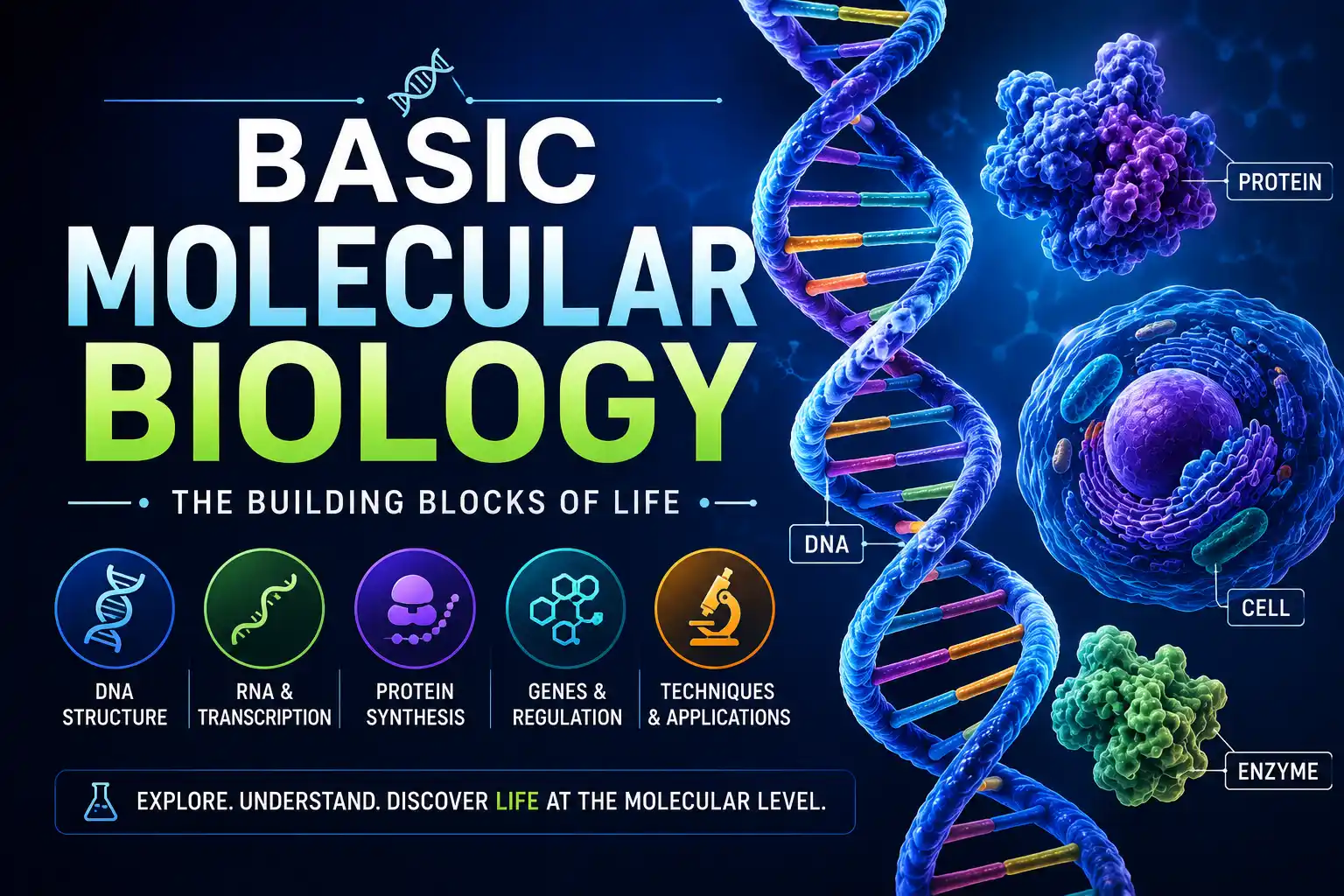
This course from Xi'an Jiaotong University takes you on a journey from the basics of DNA structure to the intricate processes of gene expression and regulation. You'll learn about the molecules that build life: DNA, RNA, proteins, and enzymes. You'll discover how genetic information flows from DNA to RNA to protein (the central dogma), how DNA replicates, how mutations happen and are repaired, and how genes are turned on and off.
But this isn't just theory. You'll also learn powerful molecular techniques like PCR, gel electrophoresis, DNA sequencing, and hybridization. These are the tools that let scientists "see" and manipulate the molecular world. The course includes 8 chapters, over 170 short video lessons, and a final exam. It's designed for students in life sciences, but even if you're not a biology major, it's a fascinating window into understanding yourself and the world of life.
This free, self-paced course is taught by Professor Xiaoyun Lu and three other experienced instructors. You'll have access to high-quality video lectures, chapter quizzes, and learning resources. Upon completion, you can earn a verified certificate from Xi'an Jiaotong University.
Course Provider
Provider: Xi'an Jiaotong University, one of China's top universities, with a strong reputation in life sciences and biomedical research. The course is delivered through XuetangX, a leading Chinese MOOC platform founded by Tsinghua University.
Platform: XuetangX online learning platform – fully online, self-paced, with video lessons, quizzes, and a final exam.
Accreditation: This is an official university course. Upon passing the final exam, you can purchase a verified certificate from Xi'an Jiaotong University and XuetangX, which is respected by employers and academic institutions worldwide.
Course Syllabus (8 Chapters + Final Exam)
Learning Objectives
- Understand the structure and function of DNA, RNA, and proteins.
- Explain the central dogma: replication, transcription, and translation.
- Describe how genes are regulated in both prokaryotes and eukaryotes.
- Identify common DNA mutations and repair mechanisms.
- Explain how chromatin structure affects gene expression.
- Understand key molecular biology techniques (PCR, electrophoresis, sequencing, hybridization).
- Analyze how molecular biology applies to medicine, biotechnology, and everyday life.
- Build a foundation for advanced studies in genetics, biochemistry, or biomedical research.
Course Prerequisites
Background: A basic understanding of biochemistry is recommended (familiarity with concepts like proteins, enzymes, and basic cell structure). However, the course is designed to be accessible to motivated beginners. If you have high school-level biology, you should be fine.
Language: The course is taught in English. The platform interface can be switched to English.
Who should take this: Life science majors, pre-med students, biotechnology enthusiasts, and anyone curious about how life works at the molecular level.
User Reviews
"I'm a first-year biology student, and this course saved me. The professors explain complex concepts like DNA replication and transcription with clear animations and real-world examples. The chapter on PCR and gel electrophoresis was especially helpful for understanding my lab classes. Highly recommended."
"A very thorough introduction to molecular biology. I appreciated the historical context at the beginning (how we discovered DNA's structure). The lectures are well-paced, and the quizzes help reinforce learning. Some of the English pronunciation is accented, but subtitles are available and it's perfectly understandable."
"I'm a high school teacher, and I took this course to refresh my knowledge. It's excellent. The explanations of operons (Lac and Trp) were clearer than any textbook I've used. The final exam is challenging but fair. I'm now recommending this to my advanced students."
Based on 550+ ratings on XuetangX.
💡 Final Thoughts
Molecular biology can seem intimidating, but it's truly the language of life. This course from Xi'an Jiaotong University is an outstanding introduction. The professors break down complex topics (supercoiling, chromatin remodeling, alternative splicing) into understandable pieces. You'll not only learn the concepts but also gain appreciation for the techniques that let us study molecules. The course is substantial—over 170 lessons—so it requires commitment, but the payoff is a genuine understanding of how life works at the molecular level. Whether you're a biology student, a pre-health professional, or just a curious person, this course will change how you see the world. The free auditing option gives you full access to all videos and materials.
Basic Molecular Biology (Xi'an Jiaotong University) – FAQ
Is this course really free?
Yes, the course is completely free to audit. You can watch all video lectures, access all materials, and take quizzes without paying. A verified certificate costs a fee if you want one, but auditing is free.
What background do I need?
Basic biochemistry is recommended, but the course is accessible to motivated beginners with high school biology. You should be comfortable with terms like "cell," "protein," and "enzyme."
How long is the course?
It's self-paced, but expect 8-10 weeks if you study 3-4 hours per week. The course contains over 170 short video lessons across 8 chapters, plus a final exam.
Will I get a certificate?
You can earn a verified certificate from Xi'an Jiaotong University and XuetangX by paying a fee and passing the final exam. Free auditing does not include a certificate, but you still learn the same material.
Is the course in English?
The course is taught in English. The instructors are Chinese professors who speak English clearly. Subtitles are available. The platform interface can be switched to English.
Is this course good for pre-med students?
Absolutely. Molecular biology is foundational for medical studies. This course covers DNA replication, mutation, repair, gene expression, and regulation—all core topics for the MCAT and medical school.
What textbook does the course follow?
The course references several standard textbooks: "Molecular Biology: Principles and Practice" by Cox, Doudna & O'Donnell; "Molecular Biology of the Gene" by Watson et al.; and "Fundamental Molecular Biology" by Allison. However, the video lectures are self-contained.