Challenges and Solutions in Future Power Networks
Course Description
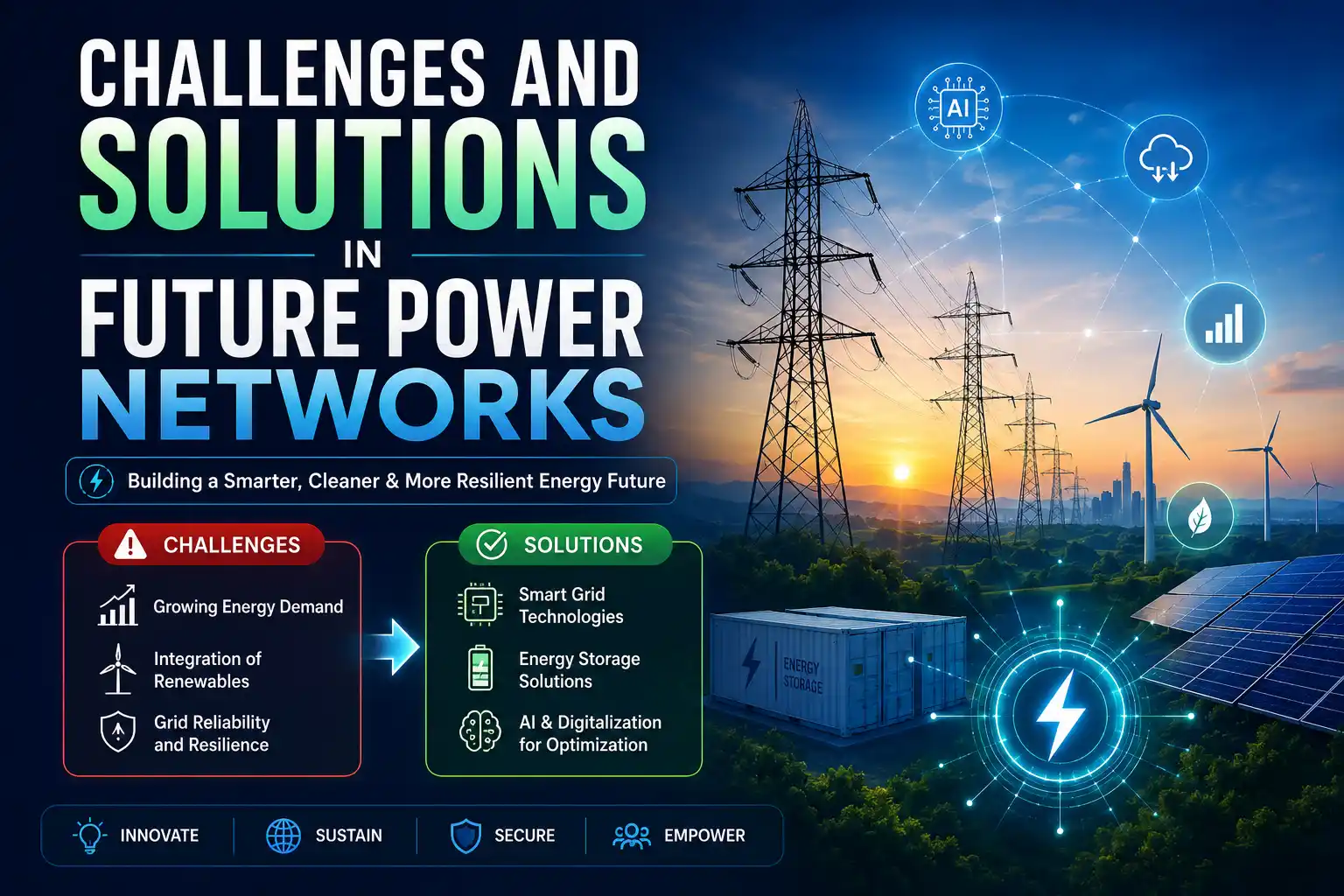
The global energy system is undergoing its biggest transformation in a century. Growing demand, the push for renewables, and the need for a reliable grid create real challenges. But with those challenges come exciting solutions.
This free course, offered through the European Multiple MOOC Aggregator (EMMA), gives you a clear look at how we're building a smarter, cleaner, and more resilient energy future. You'll explore topics like voltage control, real-time simulations, monitoring systems, cybersecurity for critical infrastructure, and multi-terminal DC grids. The course is taught by experts from RWTH Aachen University, one of Europe's leading technical universities.
It's designed for students, engineers, energy professionals, or anyone curious about the future of electricity. No advanced math or engineering degree is required, though some basic technical curiosity will help. The course is self-paced and completely free.
Course Provider
Provider: European Multiple MOOC Aggregator (EMMA), a platform that brings together high-quality MOOCs from across Europe.
Instructor: Prof. Antonello Monti, Director of the Institute for Automation of Complex Power Systems at RWTH Aachen University, with contributions from Dr. Ferdinanda Ponci and tutor Marco Pau.
Platform: EMMA platform – fully online, self-paced. You will be redirected to the provider's platform to access the course materials.
License: Content is shared under CC BY SA ND (Creative Commons Attribution-ShareAlike-NoDerivatives).
Course Syllabus (6 Lessons)
Learning Objectives
- Understand and define the key challenges facing future power systems.
- Learn how new control techniques can address those challenges.
- Discover how real-time simulations help test solutions for future power systems.
- Understand how monitoring systems enable key functions in future power networks.
- Gain awareness of cybersecurity needs for critical energy infrastructure.
- Explore multi-terminal DC grids as a solution for long-distance and renewable integration.
Course Prerequisites
Technical: No strict prerequisites. A basic understanding of electricity or power systems is helpful but not required. The course is accessible to motivated beginners with an interest in energy.
Language: The course is taught in English. Subtitles or transcripts may be available.
Who should take this: Engineering students, energy professionals, policymakers, or anyone interested in the future of electricity grids, renewable energy, and smart grid technologies.
User Reviews
"I'm an electrical engineering student, and this course was a great supplement to my studies. The lesson on real-time simulations was especially eye-opening. Professor Monti explains complex topics in a clear way. Not too basic, not too advanced. Just right."
"I work in grid operations, and this course helped me see the bigger picture. The cybersecurity lesson is very timely. I appreciated that it's free and from a respected European university. The DC grids module gave me new ideas for my job."
"A solid introduction to future power networks. The content is technical but not overwhelming. I would have liked a certificate at the end, but the knowledge itself is valuable. Good for anyone wanting to understand the energy transition beyond just solar panels and wind turbines."
Based on 316+ enrolled learners on EMMA platform.
💡 Final Thoughts
This isn't a fluffy introduction to renewable energy. It's a serious, engineering-informed look at the technical challenges and solutions for future power networks. If you want to understand what grid operators and energy engineers actually work on, this course delivers. The instructors from RWTH Aachen are top-tier experts. While there's no formal certificate, the knowledge is substantial. It's a fantastic free resource for students, professionals, or anyone who wants to look under the hood of the clean energy transition.
Challenges and Solutions in Future Power Networks – FAQ
Is this course really free?
Yes, completely free. The European Multiple MOOC Aggregator (EMMA) offers this course at no cost. You'll be redirected to the provider's platform to access the materials.
Do I need an engineering background?
Not necessarily. Some basic familiarity with electricity or power systems is helpful, but the course is designed to be accessible to motivated learners from various backgrounds. If you're curious about how future grids work, you'll be fine.
How long does the course take?
The course is self-paced. It consists of 6 lessons. Most learners complete it in 6 to 10 hours, depending on how deep they dive into each topic.
Will I get a certificate?
The course does not automatically provide a formal certificate. However, you can self-report your completion. Some learners use the knowledge gained to demonstrate their understanding in job interviews or academic settings.
Who is the instructor?
The course is taught by Prof. Antonello Monti, Director of the Institute for Automation of Complex Power Systems at RWTH Aachen University, a leading European technical university. He is joined by Dr. Ferdinanda Ponci and tutor Marco Pau.
What makes this course different from general energy courses?
This course focuses specifically on the technical challenges of future power networks: voltage control, real-time simulations, monitoring, cybersecurity, and DC grids. It's not a broad overview of renewable energy. It's a deeper look at grid-level solutions.