Contemporary Electronic System Design
Course Description
Modern electronic systems are everywhere: from smartphones and smartwatches to medical devices and autonomous vehicles. But how are they actually designed? This course, offered by Tsinghua University (one of the world's top engineering schools), gives you a complete, practical introduction to contemporary electronic system design.
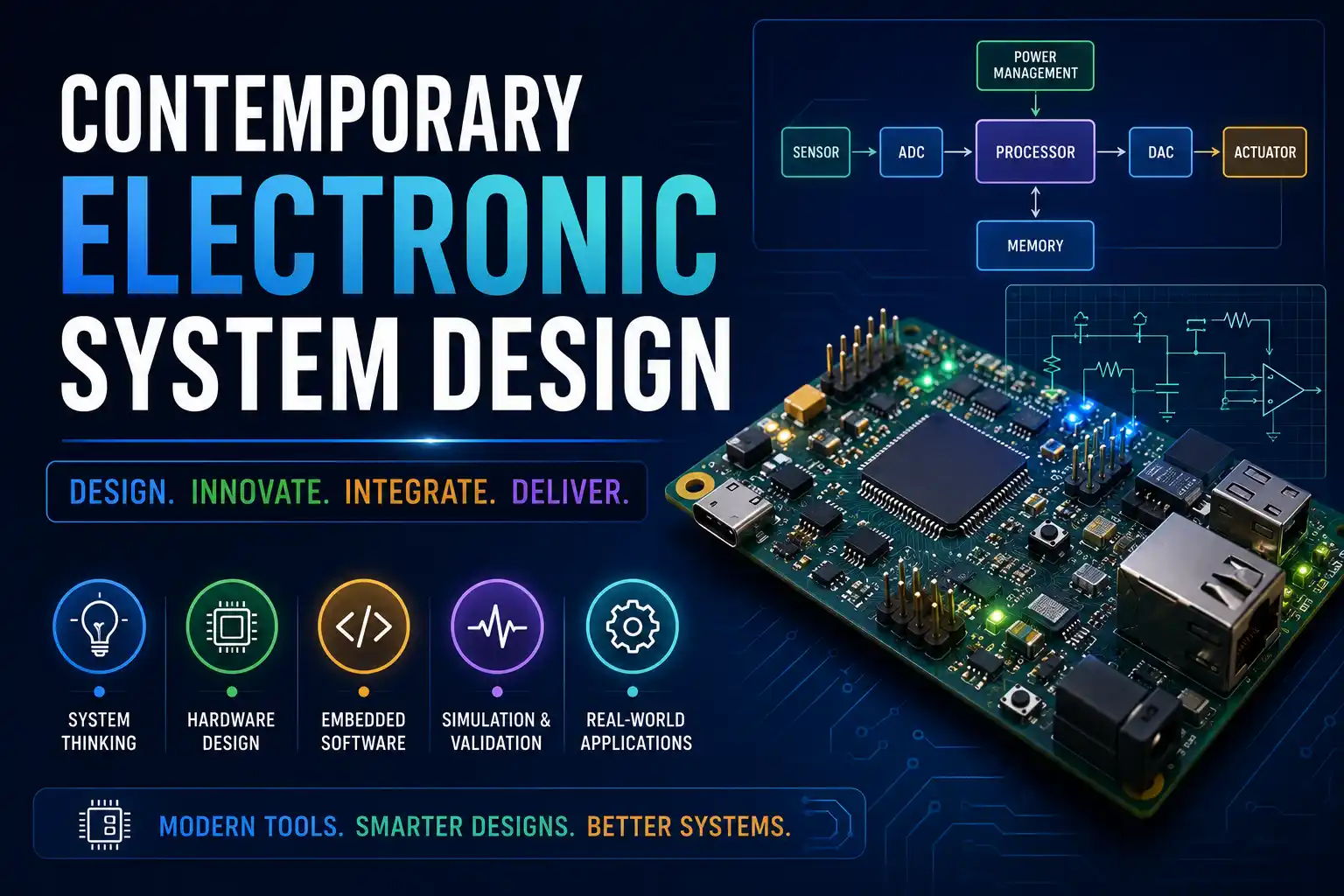
You'll learn a modern, holistic approach that combines system thinking, hardware design, embedded software, simulation and validation, and real-world applications. The course emphasizes modern tools and smarter design methodologies that lead to better systems. It's ideal for engineering students, practicing engineers, or anyone with a basic electronics background who wants to understand how complete systems are built.
This free, self-paced course is delivered by Tsinghua University through XuetangX, a leading Chinese MOOC platform. You'll work through video lectures, assignments, and a final project. Upon successful completion, you can earn a verified certificate to showcase your skills.
Course Provider
Provider: Tsinghua University, consistently ranked as one of the best universities in China and a global leader in engineering and technology. The course is delivered through XuetangX, a MOOC platform founded by Tsinghua University.
Platform: XuetangX online learning platform – fully online, self-paced, with video lessons, assignments, and a final project.
Accreditation: This is an official Tsinghua University course. Upon completion (passing all assessments), you receive a verified certificate from Tsinghua University and XuetangX, which is respected by employers worldwide.
Course Syllabus (Core Modules)
Learning Objectives
- Apply system thinking to design complete electronic systems.
- Select appropriate hardware components (microcontrollers, FPGAs, sensors) for a given application.
- Write embedded software that interfaces effectively with hardware.
- Use simulation tools to validate designs before building physical prototypes.
- Understand modern design workflows and tools used in industry.
- Analyze real-world electronic systems and identify design trade-offs.
- Complete a design project from concept to documentation.
- Earn a certificate from Tsinghua University.
Course Prerequisites
Background: Basic knowledge of electronics (e.g., Ohm's law, basic components like resistors, capacitors, transistors) and some programming experience (C/C++ is helpful). Familiarity with microcontrollers (like Arduino) is a plus but not required.
Language: The course is taught in English. Subtitles are available. The platform interface can be switched to English.
Tools: You may need access to simulation software (free versions or trials are suggested) and optionally a development board for hands-on practice (not mandatory).
User Reviews
"This course gave me the missing piece between theory and real product design. Before, I knew how to program and I knew basic circuits, but I didn't know how to bring them together into a complete system. The module on system thinking changed my approach entirely. Highly recommended for any electronics engineer."
"A very thorough course from a top university. The lectures are dense with information. I particularly appreciated the simulation and validation module, which is often overlooked in other courses. The final project is challenging but rewarding. Be prepared to put in the work."
"I'm an embedded software engineer, and I took this course to understand hardware better. It was eye-opening. The professors explain complex topics like hardware-software co-design very clearly. The case studies on IoT and automotive systems were directly applicable to my work. Worth every hour."
Based on 120+ ratings on XuetangX.
💡 Final Thoughts
Tsinghua University is a world-class engineering school, and this course reflects that quality. It's not a superficial overview. You'll learn a true engineering methodology for designing complete electronic systems, from concept to validation. The combination of system thinking, hardware, software, and simulation is exactly what industry needs today. If you're an electrical engineering student, a practicing engineer, or a hobbyist who wants to go beyond Arduino tutorials and understand professional design workflows, this course is a goldmine. The free certificate from Tsinghua is a serious credential. Be ready to work hard—but you'll come out a much better engineer.
Contemporary Electronic System Design (Tsinghua) – FAQ
Is this course really free?
Yes, the course is completely free to audit. You can watch all videos and access all materials. A verified certificate costs a fee if you want one, but auditing is free.
What background do I need?
Basic electronics (components, Ohm's law) and some programming experience (C/C++ is best). If you've worked with an Arduino or similar, you'll be fine. Complete beginners will struggle.
How long is the course?
It's self-paced, but expect 8-10 weeks if you study 3-5 hours per week. There are video lectures, assignments, and a final project.
Will I get a certificate?
You can earn a verified certificate from Tsinghua University and XuetangX by paying a fee and passing the assessments. Free auditing does not include a certificate.
Is the course in English?
The course is taught in English. The XuetangX platform interface can be switched to English. Some supplementary materials may include Chinese, but the core content is English.
Do I need to buy hardware?
No, the course focuses on simulation and design methodologies. You can complete it entirely with free software tools. Optional hardware is suggested but not required.