Generative AI for Healthcare
Course Description
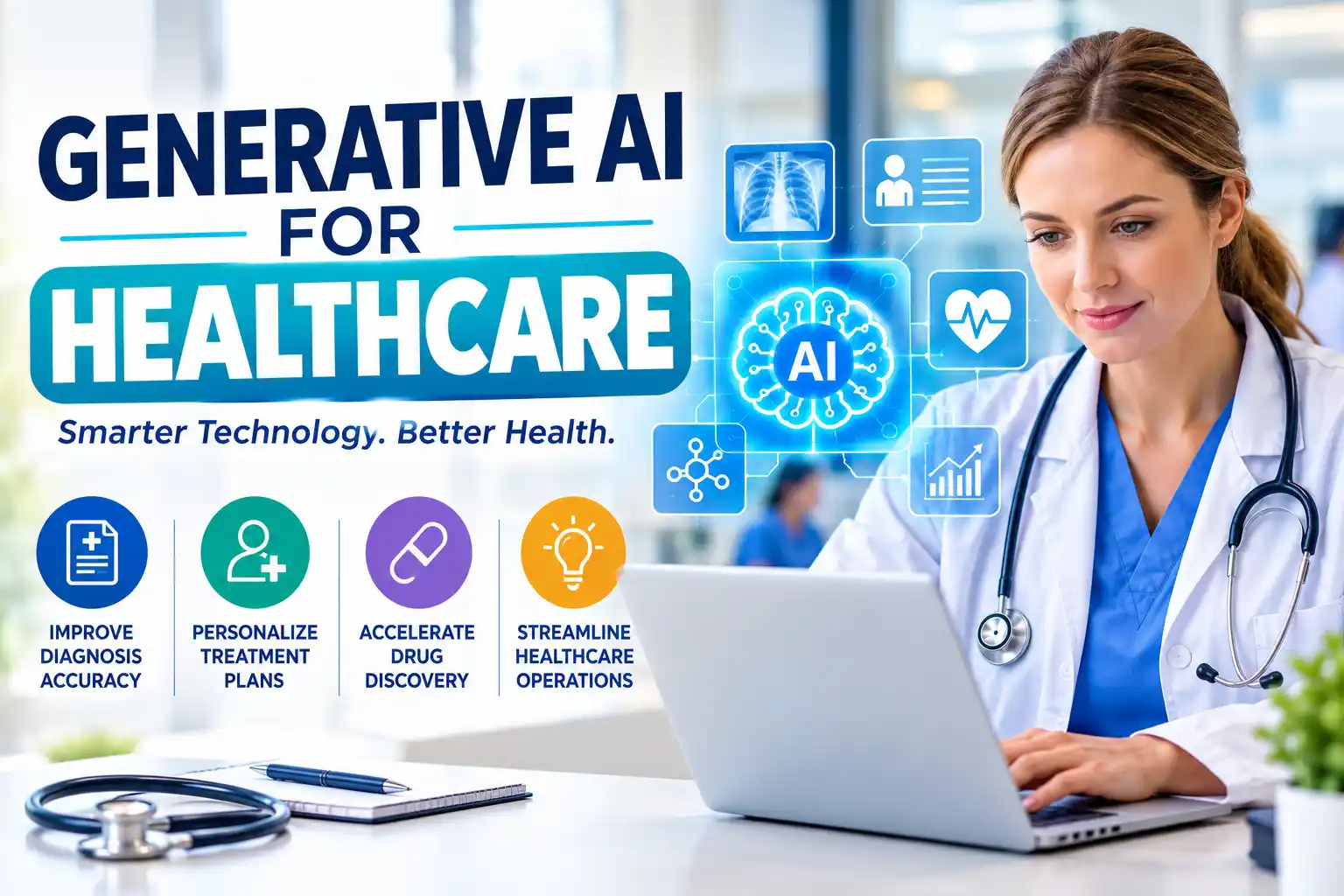
Generative AI is transforming the way healthcare professionals work, but understanding it doesn't require a technical background. This short, focused course from Google Skills is designed specifically for clinicians, administrators, and medical researchers who want to know what this technology is, how it works, and where it fits in real healthcare settings.
You'll start with the fundamentals: what artificial intelligence and machine learning actually mean. Then you'll explore generative AI, the breakthrough technology behind tools like chatbots and content generators, and the large language models (LLMs) that power them. More importantly, you'll see real-world healthcare use cases, from summarizing clinical notes to assisting with patient communication and research.
The course also teaches you the art of prompt design, so you can craft effective questions and instructions that get useful, accurate responses from AI tools. No prerequisites required, and no coding involved. In about an hour, you'll have a practical foundation you can apply immediately.
Course Provider
Provider: Google Skills, Google's official platform for digital skills training and career development.
Platform: Google Skills online learning platform, fully online and self-paced.
Accreditation: This course is part of Google's broader AI upskilling initiative and was developed in collaboration with healthcare stakeholders through the Digital Medicine Society. Upon completion, you earn a verifiable Google Skills badge that you can share on LinkedIn and other professional networks.
Course Syllabus (Key Modules)
Learning Objectives
- Define and explain artificial intelligence and machine learning concepts.
- Describe generative AI and applicable healthcare use cases.
- Understand what large language models are and how they can be used in healthcare.
- Utilize prompt design and prompt engineering to develop effective question-and-answer prompts.
- Recognize where generative AI can support clinical, administrative, and research workflows.
- Earn a Google Skills badge to showcase your new knowledge.
Course Prerequisites
Technical: None. No coding, math, or prior AI experience is required.
Language: The course is available in English.
Who should take this: Physicians, nurses, and other clinical professionals; healthcare administrators and managers; medical researchers; health informatics specialists; and healthcare technology innovators.
User Reviews
"I've been hearing about AI for years but never felt I had the time to understand it. This course was perfect. It explained LLMs in plain language and the healthcare examples were directly relevant to my work. The prompt design section alone was worth the hour. I'm now using what I learned to draft patient education materials more efficiently."
"A concise, well-structured introduction. The course doesn't oversell AI or ignore the limitations. It gives a balanced view of what these tools can and can't do in a clinical context. The Google badge is a nice credential for my LinkedIn. Highly recommended for busy healthcare professionals."
"I'm a medical researcher and I took this course to understand how generative AI might help with literature reviews. The use cases were practical, and the prompting techniques saved me time immediately. The course is only an hour, but it changed how I approach my daily tasks. Thank you, Google."
Based on 2,300+ ratings on Google Skills and partner platforms.
💡 Final Thoughts
Healthcare is one of the most promising and most sensitive areas for generative AI. This course strikes the right balance: it's optimistic but grounded, practical but not technical. In about an hour, you'll understand what LLMs are, how they work, and where they can genuinely help in clinical and administrative settings. You'll also learn how to write prompts that produce useful, reliable results. The free Google Skills badge is a credible credential for your professional profile. If you work in healthcare and want to be part of the conversation about AI rather than watching from the sidelines, this is an excellent place to start.
Generative AI for Healthcare – FAQ
Is this course really free?
Yes, the course materials are free to consume. You just need a Google Skills account. Note that if the course includes labs, those may require a subscription or credits, but the core content and badge are accessible without payment.
Do I need any technical or AI experience?
None at all. The course is designed for healthcare professionals with no technical background. It starts from the very basics and explains everything in plain language.
How long does the course take?
About 1 hour. It's a short, focused introduction designed for busy clinicians and administrators.
Will I get a certificate or badge?
Yes, upon completing the required items, you'll earn an official Google Skills badge that you can share on LinkedIn and other professional networks.
Is this course only for doctors?
No. It's designed for a wide range of healthcare professionals, including nurses, administrators, researchers, informatics specialists, and technology innovators.
Does the course cover prompt engineering?
Yes. One of the core objectives is learning prompt design and engineering to develop effective question-and-answer prompts for healthcare tasks.