Health Information Systems to Improve Quality of Care in Resource-Poor Settings
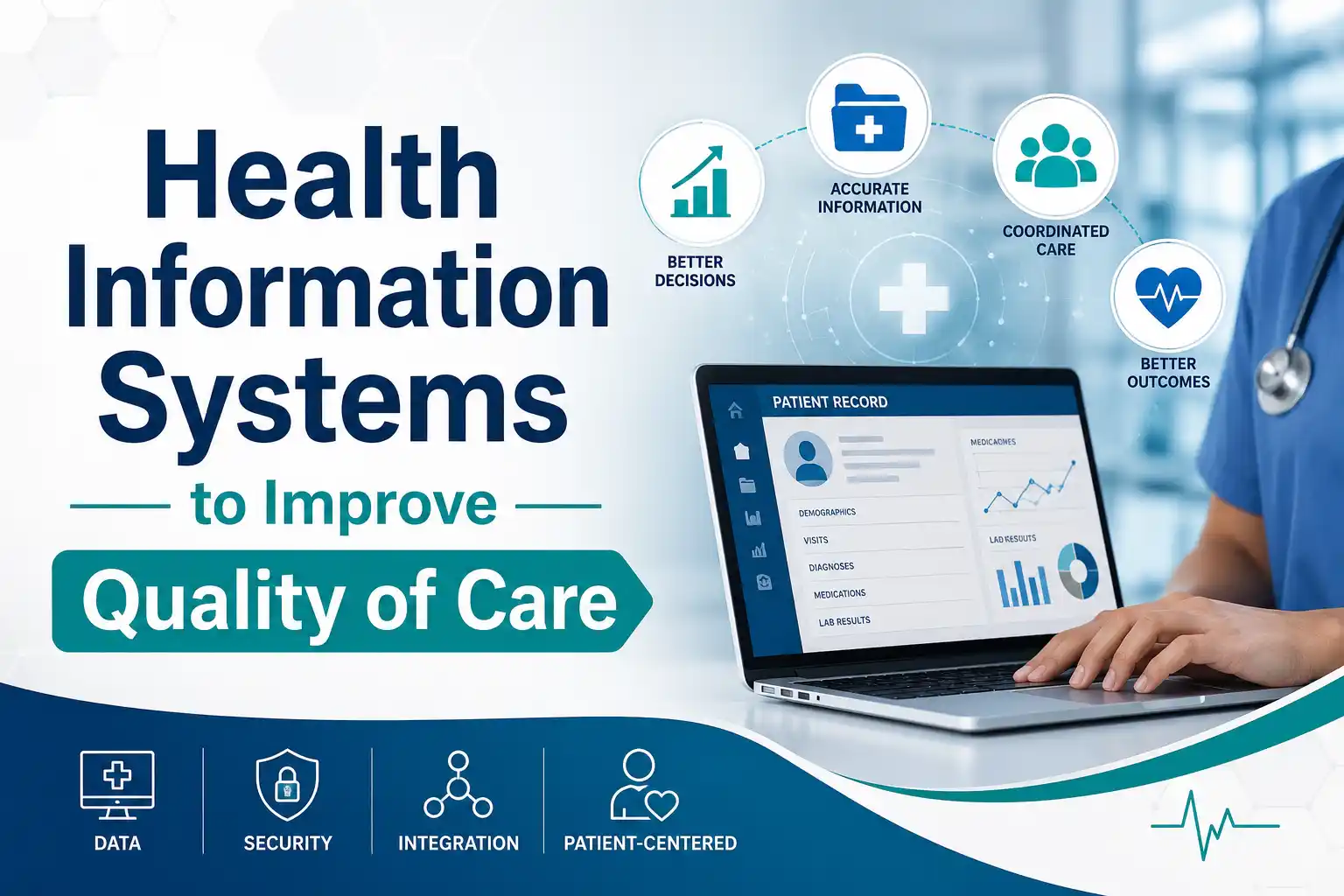
Course Description
How can technology improve healthcare in the world's most challenging environments? This powerful graduate-level course from MIT, developed in collaboration with Sana, Partners in Health, and the Institute for Healthcare Improvement (IHI), tackles exactly that question.
The course focuses on designing and implementing health information systems in resource-poor settings. You'll learn from internationally recognized experts who share real operational experiences: the challenges they faced and how they solved them. The goal is to develop innovations that (1) improve health outcomes, (2) strengthen existing organizational infrastructure, and (3) create collaborative ecosystems that maximize the value of these innovations.
This free, self-paced course includes lecture videos, detailed notes, and sample projects. It's ideal for graduate students, public health professionals, healthcare administrators, IT developers, and anyone passionate about global health equity. While MIT OpenCourseWare does not offer a certificate, the knowledge and MIT credibility are unmatched.
Course Provider
Provider: MIT OpenCourseWare (OCW) – the Massachusetts Institute of Technology's initiative to publish all its course materials online for free. This specific course was a collaboration between MIT, Sana (a student group focused on mobile health), Partners in Health (a global health nonprofit), and IHI (Institute for Healthcare Improvement).
Platform: MIT OCW website – fully open access, no account required, all materials downloadable.
Accreditation: MIT OCW is not a degree-granting or certificate-granting program. However, completing the course materials demonstrates serious self-study and knowledge of MIT-caliber content. Employers and graduate schools recognize the rigor of MIT OCW courses.
Course Syllabus (Selected Topics)
Learning Objectives
- Design health information system innovations that directly improve health outcomes in resource-poor settings.
- Strengthen existing organizational infrastructure through appropriate technology and process design.
- Create collaborative ecosystems that maximize the value and sustainability of health IT innovations.
- Analyze real-world case studies of successful and failed health IT implementations.
- Understand data security, privacy, and ethical considerations unique to low-resource contexts.
- Apply patient-centered design principles to global health technology.
- Learn from internationally recognized experts from MIT, Partners in Health, and IHI.
Course Prerequisites
Background: This is a graduate-level course. It assumes some familiarity with healthcare systems, public health, or information technology. Ideal for students in health sciences, public health, health IT, computer science, or global development.
Language: All materials are in English, at a graduate academic level.
Technical: No specific software required, but interest in health data and information systems is essential.
User Reviews
"I work for a nonprofit in rural Uganda setting up electronic medical records. This course was a goldmine. The guest speakers from Partners in Health shared practical challenges I face every day—like unreliable electricity and staff turnover. The case studies alone are worth the time. MIT OCW is a gift to global health."
"The module on data security in low-resource settings changed how I think about system design. We often copy solutions from rich countries that don't fit. This course taught me to start with the local context and build up. Highly recommended for anyone serious about health IT in developing countries."
"Excellent content, but be prepared for a graduate-level workload. The lecture videos are from actual MIT classes, so they move fast. No certificate, but I learned more from this free course than from some paid ones. The collaboration with IHI and Partners in Health gives it real-world weight."
Based on 45+ ratings on OCW and independent reviews.
💡 Final Thoughts
This is not a course for the faint of heart. It's MIT graduate-level material, and it assumes you care deeply about global health equity. But if you do—if you want to use technology to save lives in places with few resources—this course is transformative. The collaboration with Partners in Health (famous for its work in Rwanda and Haiti) and IHI (a leader in healthcare quality) means you're learning from people who have actually done the work in the toughest conditions. The lack of a certificate is disappointing, but the knowledge and inspiration are priceless. Highly recommended for public health professionals, IT developers, and anyone who believes that good information systems can change the world.
MIT Health Information Systems Course – FAQ
Is this course really free?
Yes. MIT OpenCourseWare provides all materials completely free. No registration, no payment, no account needed. You can download everything.
Will I get a certificate?
No, MIT OCW does not offer certificates or degrees. This is for self-study only. However, you can list the course on your resume as "MIT OpenCourseWare: Self-Study in Health Information Systems."
What level is this course?
Graduate-level (Master's or PhD). It's challenging and assumes prior knowledge of healthcare or IT. Not recommended for beginners.
How do I access the materials?
Visit the MIT OCW course page. All lecture videos, notes, assignments, and projects are available for download or streaming. No login required.
Who are the guest speakers?
Experts from Partners in Health (e.g., staff who implemented EMRs in Rwanda and Haiti), Sana (MIT student mobile health group), and IHI (quality improvement leaders). Their operational case studies are the highlight of the course.
Is this course still relevant (from 2011/2012)?
Yes, the core principles—data security, integration, patient-centered design, and implementation in low-resource settings—remain highly relevant. Technology has advanced, but the operational and systems-thinking lessons are timeless.