Networking for Web Developers
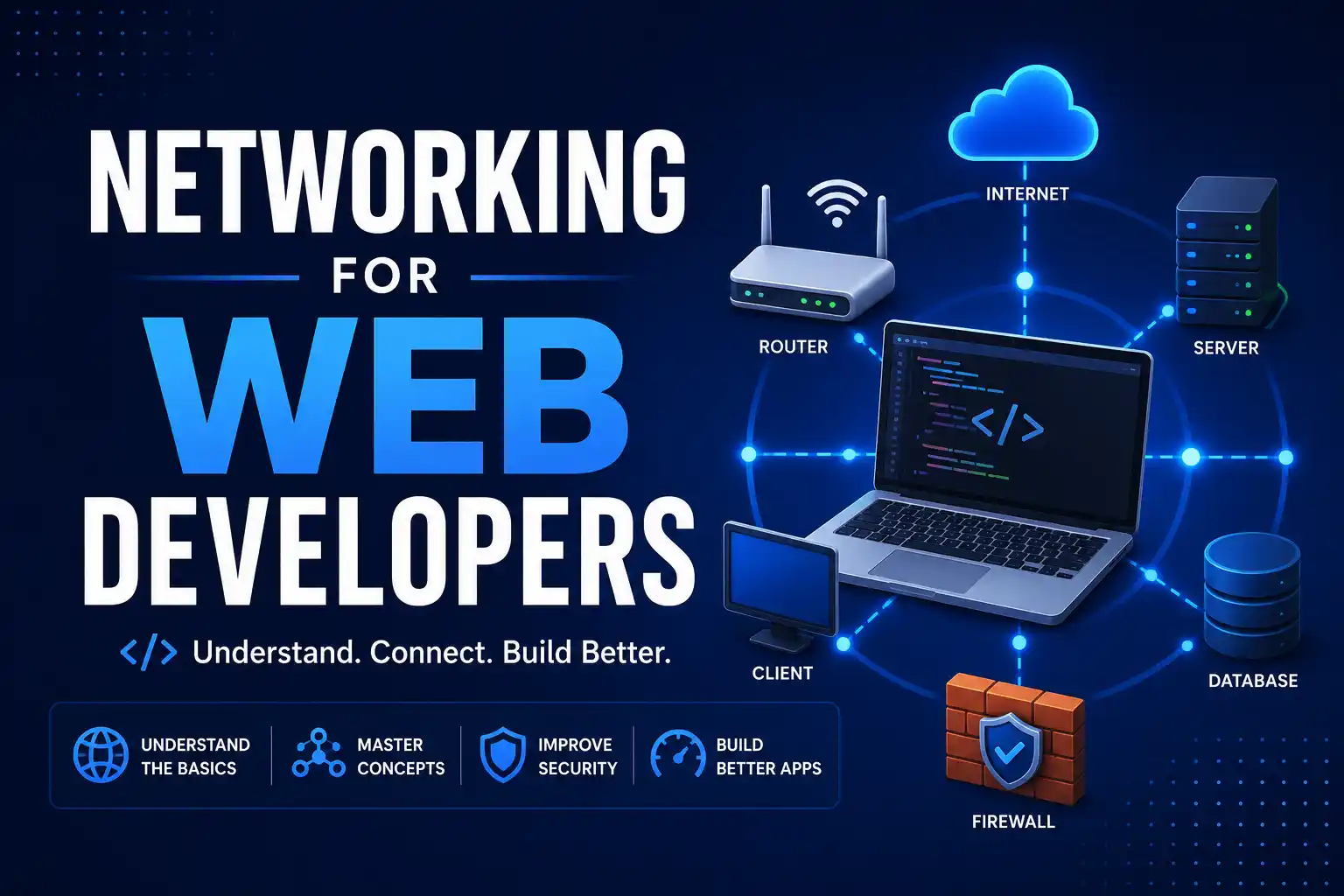
Course Description
You use the internet every day. But do you really understand how it works under the hood? This free course from Udacity demystifies the network foundations that power the web. You'll learn what happens when you type a URL into a browser, how data travels across networks, and why understanding these concepts makes you a better, more effective web developer.
This free, self-paced course is designed for web developers of all levels who want to move beyond "it just works" and gain a solid mental model of internet infrastructure. You'll explore the client-server model, HTTP basics, DNS, security fundamentals like firewalls, and practical troubleshooting techniques. No prior networking experience is required. The course is taught by Karl Krueger, a seasoned command line instructor, and includes practical exercises that tie networking concepts directly to your daily work as a developer.
When you complete the course, you'll receive a certificate of completion from Udacity to showcase your understanding of web networking fundamentals.
Course Provider
Provider: Udacity, a leading online learning platform founded by former Stanford professors, known for its industry-relevant "Nanodegree" programs and free courses.
Platform: Udacity's online classroom – fully online, self-paced, with video lessons and practical exercises.
Instructor: Karl Krueger, Command Line Instructor at Udacity, brings real-world experience and clear explanations to complex networking topics.
Course Syllabus (5 Lessons)
Note: The course includes practical exercises and quizzes to reinforce each concept.
Learning Objectives
- Understand the fundamental difference between the Internet and the World Wide Web.
- Explain the client-server model and how web browsers interact with web servers.
- Read and interpret HTTP requests, responses, status codes, and headers.
- Understand how DNS (Domain Name System) translates domain names to IP addresses.
- Recognize basic network security concepts including firewalls and HTTPS.
- Troubleshoot common networking issues that affect web applications.
- Build more efficient and secure web apps by understanding network constraints.
Course Prerequisites
Technical: None. This course is designed for web developers of all levels, including complete beginners. No prior networking or command line experience is required. Basic familiarity with web browsing is helpful but not necessary.
Language: Fluency in written and spoken English is recommended, as the course is taught in English.
Who should take this: Web developers, frontend and backend engineers, computer science students, or anyone who builds for the web and wants to understand the network layer that makes it all possible.
User Reviews
"Good concepts. This course finally made me understand what happens after I type a URL and press enter. The DNS lesson alone was worth it. Highly recommend for junior devs."
"Excellent course. Karl explains things very clearly. I've been building websites for a year but never really understood HTTP status codes beyond 200 and 404. This filled so many gaps."
"It's a very important course that I really enjoy. The security section on firewalls and HTTPS is practical and immediately useful. A must for anyone serious about web development."
Based on 37+ ratings on Udacity.
💡 Final Thoughts
Many web developers treat the internet like magic. This course pulls back the curtain. You'll learn the actual mechanics of how browsers talk to servers, how domain names are resolved, and what those HTTP status codes really mean. It's not a deep dive into network engineering, and it doesn't need to be. It's the perfect amount of networking knowledge for a working web developer. Karl Krueger is a fantastic instructor, and the course is short enough to finish in a weekend. If you build for the web, you owe it to yourself to understand the network it runs on. Highly recommended.
Networking for Web Developers (Udacity) – FAQ
Is this course really free?
Yes, completely free. Udacity offers this course at no cost. You just need to create a free Udacity account (or sign in with Google or Facebook). No payment or credit card required.
Do I need to be an experienced developer?
Not at all. The course is designed for web developers of all levels, including beginners. If you've built a simple HTML page or followed a basic web tutorial, you're ready. No networking experience is assumed.
How long does the course take?
The course is self-paced with 5 lessons. Most learners complete it in about 4 to 6 hours total. You can finish in a day or spread it out over a week.
Will I get a certificate?
Yes, upon completing the course (watching all videos and passing any quizzes), you'll receive a certificate of completion from Udacity. You can share it on LinkedIn or add it to your resume.
Is this course outdated? It was last updated in 2022.
Networking fundamentals like HTTP, DNS, and client-server models haven't changed significantly. The core concepts taught in this course remain highly relevant. For the basics, 2022 is perfectly fine. HTTP/2 and HTTP/3 are mentioned in related courses, but this one focuses on rock-solid fundamentals.
Will this help me pass a networking certification like Network+?
This course is designed for web developers, not for IT networking certifications. It covers the subset of networking most relevant to building web applications. For full certification prep, you'd need a more comprehensive course. But for daily web development work, this is exactly what you need.