SOC Essentials: Investigating with Splunk
Course Description
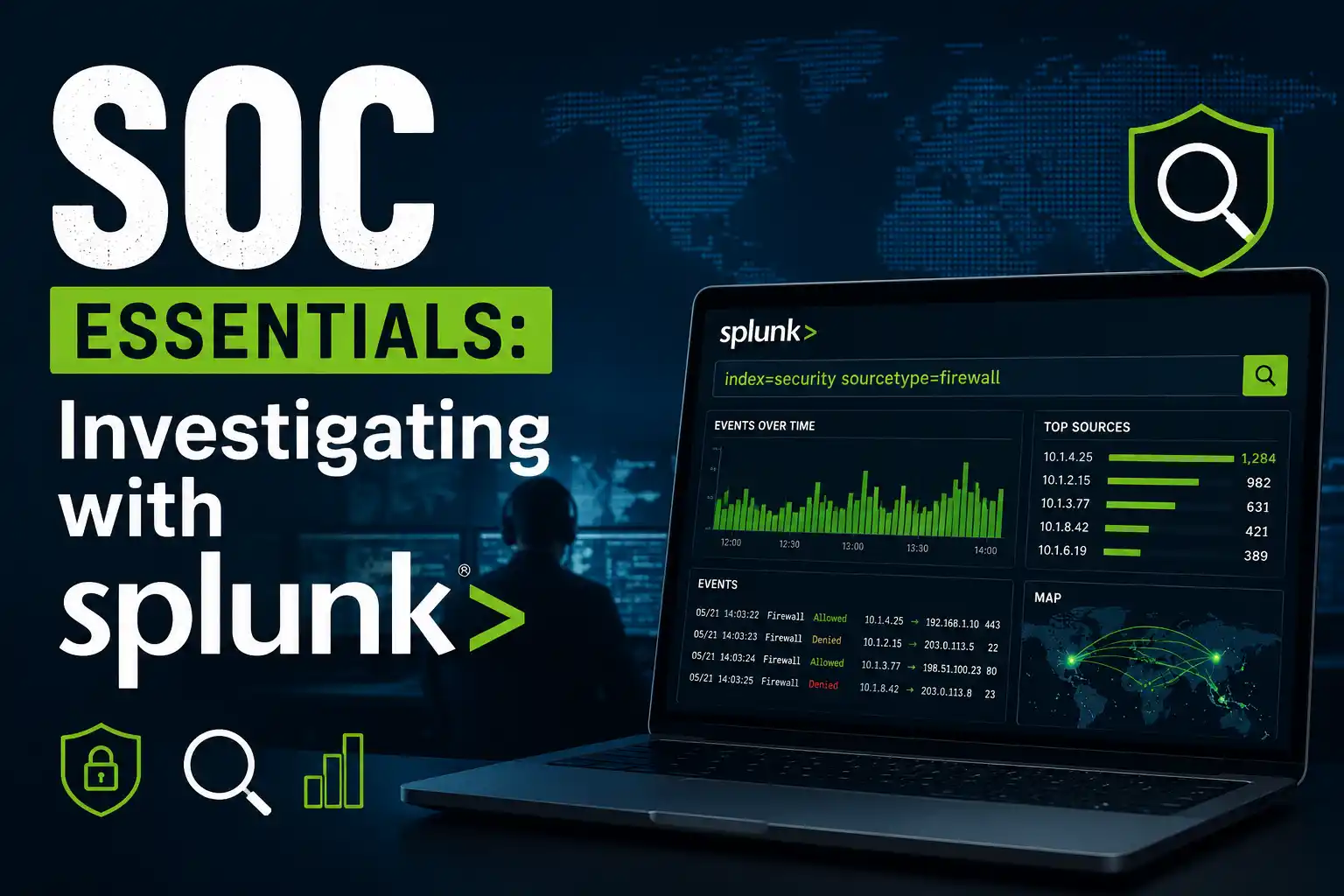
Security Operations Center (SOC) analysts spend their days hunting for threats, investigating alerts, and making sense of massive amounts of log data. Their primary tool? A SIEM (Security Information and Event Management) system. Splunk is one of the most widely used SIEM platforms in the world. This course teaches you how to use it like a pro.
You'll learn how to navigate Splunk's interface, write effective search queries, correlate events from different sources, use data models, and create dashboards. More importantly, you'll learn the investigative mindset: how to take an alert and follow the evidence to determine if an attack is real, what happened, and what to do next. The course includes hands-on labs with real security data.
This free, self-paced course takes about 15 hours to complete. It's ideal for aspiring SOC analysts, cybersecurity students, and IT professionals who want to master one of the most important tools in security operations. Upon completion, you'll earn an official Cisco digital badge.
Course Provider
Provider: Cisco Networking Academy, a global leader in IT and cybersecurity education, in partnership with Splunk (now part of Cisco).
Platform: Cisco NetAcad online platform – fully online, self-paced, with integrated Splunk lab environment (no installation required).
Accreditation: This course is excellent preparation for SOC analyst roles and Splunk certifications. Splunk skills are highly in demand by employers worldwide.
Course Syllabus (Key Modules)
Learning Objectives
- Understand the role of a SOC analyst and common investigative workflows.
- Navigate Splunk's interface and understand its core concepts (indexes, sourcetypes, fields).
- Write effective Splunk searches to find specific events and patterns.
- Correlate events from different data sources to build a complete attack timeline.
- Use data models and pivot for interactive investigation.
- Apply threat hunting techniques to proactively find malicious activity.
- Earn a Cisco digital badge demonstrating Splunk investigation skills.
Course Prerequisites
Technical: Basic understanding of networking and cybersecurity concepts. Familiarity with log formats (firewall, web server, etc.) is helpful. Prior completion of Cisco's Network Defense or Introduction to Cybersecurity is recommended.
Recommended prior courses: Introduction to Cybersecurity, Network Defense, or equivalent knowledge.
Who should take this: Aspiring SOC analysts, security operations professionals, incident responders, and cybersecurity students who want to gain hands-on Splunk skills.
User Reviews
"I've been trying to learn Splunk for months through documentation, but this course made it click. The hands-on labs are fantastic—real data, real investigations. The module on threat hunting was my favorite. I landed a SOC analyst job three weeks after completing this course, and my interviewer was impressed that I already had Splunk experience. Highly recommended."
"Excellent practical course. You don't just watch videos; you actually use Splunk to investigate security incidents. The search language takes some practice, but the course walks you through it step by step. The correlation module was particularly valuable—I can now connect firewall logs with endpoint data to see the full picture of an attack. Great preparation for the Splunk Core Certified User exam."
"As someone transitioning from IT support to cybersecurity, this course was a game-changer. Splunk is everywhere in SOCs, and now I can confidently say I know how to use it. The final investigation lab simulates a real incident—you have to find the evidence, piece together what happened, and write a report. It's tough but rewarding. The Cisco badge looks great on LinkedIn."
Based on 780+ ratings on Cisco NetAcad.
💡 Final Thoughts
Splunk is the market leader in SIEM, and Splunk skills are consistently among the most sought-after in cybersecurity job postings. This free Cisco course is your opportunity to learn Splunk in a realistic, hands-on environment. You won't just memorize commands—you'll actually investigate security incidents, correlate data, and hunt for threats. The final lab is worth the entire course: you're dropped into a real-world scenario and must use your Splunk skills to figure out what happened. If you're aiming for a SOC analyst role, this course is a must. Even if you're already in security, adding Splunk to your toolkit is a career accelerator. And it's free. Don't miss it.
SOC Essentials: Investigating with Splunk (Cisco) – FAQ
Is this course really free?
Yes, completely free. Cisco Networking Academy offers this course at no cost. You just need a free NetAcad account.
Do I need prior Splunk experience?
No. The course starts with the basics. However, you should have some general cybersecurity knowledge (e.g., what logs are, common attack types). Take Introduction to Cybersecurity first if you're a complete beginner.
Is Splunk included? Do I need to install it?
The course includes access to a virtual Splunk lab environment. No installation required. You'll practice in your browser.
How long does the course take?
About 15 hours of content plus lab time. Most learners complete it in 3-4 weeks studying part-time.
Will I receive a certificate or badge?
Yes, upon passing the final exam, you'll earn an official Cisco digital badge. You can share it on LinkedIn and other platforms.
Does this course prepare me for Splunk certification?
Yes, it's excellent preparation for the Splunk Core Certified User exam. You'll need additional study, but this course gives you a strong foundation.