Subnetting Mastery
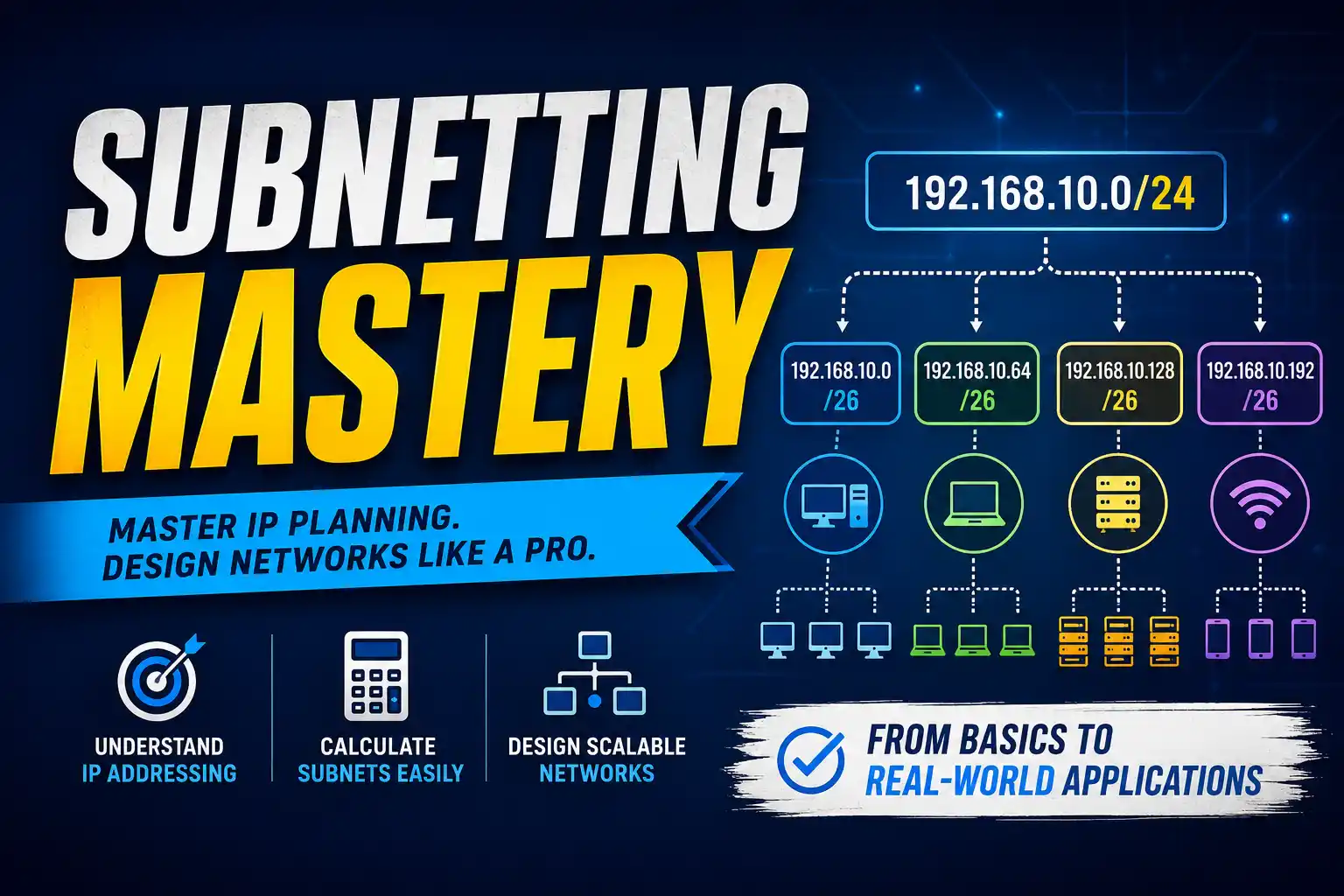
Course Description
Subnetting is the art and science of dividing IP networks into smaller, more manageable pieces. It's also one of the most feared topics for networking beginners. But it doesn't have to be hard. This free course from Cisco Networking Academy breaks down subnetting into simple, logical steps that anyone can master.
You'll start with the basics of IP addressing (IPv4 and IPv6), then move into subnet masks, CIDR notation, and the math of subnet calculation. More importantly, you'll learn why subnetting matters—how it helps design scalable, efficient, and secure networks. The course includes plenty of practice problems, real-world scenarios, and a final exam to test your skills.
This free, self-paced course takes about 6 hours to complete. It's ideal for CCNA candidates, networking students, and IT professionals who need to master IP planning. Upon completion, you'll earn an official Cisco digital badge that proves your subnetting expertise.
Course Provider
Provider: Cisco Networking Academy, a global leader in IT and networking education.
Platform: Cisco NetAcad online platform – fully online, self-paced, with interactive practice exercises.
Accreditation: This course is highly recommended for anyone preparing for the CCNA exam or working in network administration. Subnetting is a core skill tested in many networking certifications.
Course Syllabus (Key Modules)
Learning Objectives
- Understand binary and decimal numbering systems and convert between them.
- Explain the structure of IPv4 and IPv6 addresses.
- Calculate subnet masks, network addresses, broadcast addresses, and usable host ranges.
- Apply Variable Length Subnet Masking (VLSM) to create efficient IP schemes.
- Design scalable, real-world IP networks for businesses and organizations.
- Troubleshoot common IP addressing and subnetting mistakes.
- Earn a Cisco digital badge demonstrating subnetting mastery.
Course Prerequisites
Technical: Basic understanding of what an IP address is (e.g., from Networking Basics). Comfort with simple arithmetic and willingness to work with binary numbers (0s and 1s).
Recommended prior course: Networking Basics (Cisco) or equivalent introductory networking knowledge.
Who should take this: CCNA candidates, networking students, IT support specialists, system administrators, and anyone who needs to plan or manage IP networks.
User Reviews
"Subnetting always confused me. I'd read articles and watch YouTube videos, but it never clicked. This course made it click. The step-by-step approach, the practice problems, and the way they explain the 'why' behind the math—it all came together. I passed my CCNA subnetting questions easily. Worth every minute."
"I've been a sysadmin for years, but I always relied on subnet calculators. This course forced me to actually understand the math. Now I can do subnetting in my head for most common scenarios. The VLSM module was particularly valuable for designing efficient office networks. Highly recommended for anyone serious about networking."
"Excellent course, but be prepared to practice. Subnetting is a skill, not just knowledge. The course provides plenty of practice problems, but you'll need to do extra exercises on your own to really master it. That said, the explanations are clear, and the Cisco badge is a legitimate credential."
Based on 1,800+ ratings on Cisco NetAcad.
💡 Final Thoughts
Subnetting is the skill that separates networking beginners from pros. It's not just about passing the CCNA exam (though it's essential for that). It's about being able to design efficient, scalable networks without wasting IP addresses or creating routing problems. This Cisco course is the best free resource I've seen for truly mastering subnetting. It starts from the very basics (binary conversion) and builds up to VLSM and IPv6. The key is practice—do all the problems, then do them again. The Cisco digital badge is a nice bonus, but the real reward is the skill itself. If you work with networks, stop fearing subnetting. Master it.
Subnetting Mastery (Cisco) – FAQ
Is this course really free?
Yes, completely free. Cisco Networking Academy offers this course at no cost. You just need a free NetAcad account.
Do I need prior networking knowledge?
Basic knowledge of what an IP address is (from a course like Networking Basics) is helpful. If you're a complete beginner, take Networking Basics first, then come back to Subnetting Mastery.
Is math required?
Basic arithmetic and the ability to work with binary numbers (0s and 1s) is required. The course teaches binary conversion from scratch, so don't worry if you've never done it before.
How long does the course take?
The course is self-paced and takes approximately 6 hours. However, to truly master subnetting, plan to spend extra time practicing problems outside the course.
Will I receive a certificate or badge?
Yes, upon passing the final exam, you'll earn an official Cisco digital badge. You can share it on LinkedIn and other platforms.
Does this course help with the CCNA exam?
Absolutely. Subnetting is a core topic on the CCNA exam. This course will give you the skills you need to answer subnetting questions quickly and accurately.