What Is the Landscape of Portugal Scholarships?
When we talk about "portugal scholarships," we're referring to the growing range of financial aid opportunities available for students who want to study in this sun-drenched, culturally rich country on the Iberian Peninsula. Portugal has become an increasingly popular destination for international students, thanks to its high-quality universities, affordable living costs, and welcoming atmosphere. Scholarships for Portugal come from various sources, the Portuguese government through programs like the Santander Universities Scholarships and FCT (Foundation for Science and Technology) grants, individual universities, private foundations, and international organizations. These opportunities are designed to attract talented students from around the world to experience Portugal's unique blend of academic excellence, warm climate, and rich cultural heritage.
What makes the Portugal scholarship landscape so appealing is the country's strategic position as a gateway between Europe, Africa, and the Americas, offering a truly international education experience. Portugal is home to some of Europe's oldest and most prestigious universities, including the University of Coimbra, which is one of the oldest continuously operating universities in the world, University of Lisbon, and University of Porto. You'll find scholarships for every level of study, from undergraduate programs to fully-funded master's and PhD scholarships. There are opportunities focused on specific fields like marine biology, renewable energy, tourism, architecture, and Portuguese language studies. Portugal's position as a global leader in renewable energy, particularly solar and wind power, and its expertise in oceanography also mean there are scholarships tied to research in these cutting-edge fields. Whether you're drawn to the historic streets of Lisbon, the port wine cellars of Porto, or the sunny beaches of the Algarve, there's likely a scholarship that can help make your Portuguese study dream a reality.
Why Should You Pursue a Scholarship in Portugal?
Choosing Portugal as your study destination is about embracing a country that values education, innovation, and quality of life in equal measure. Portugal has invested heavily in its higher education system in recent decades, and its universities are consistently climbing in international rankings. Studying here means immersing yourself in an environment where academic excellence meets a relaxed, welcoming lifestyle. A degree from a top Portuguese institution carries growing prestige in the international job market, particularly in fields like engineering, renewable energy, architecture, and business.
Beyond the academics, Portugal offers an exceptional quality of life that is both affordable and deeply fulfilling. The country is famous for its mild climate, delicious cuisine, and stunning beaches. The people are warm, friendly, and famously hospitable, and the country consistently ranks among the safest in the world. The food is incredible, from fresh seafood and pastéis de nata to world-class wines and olive oils. And let's not forget the practical advantages, Portugal has one of the lowest costs of living in Western Europe, making it accessible for international students. When you add a scholarship into the mix, you're looking at a high-quality, affordable education in one of the world's most charming and desirable countries.
How Can You Successfully Secure a Portugal Scholarship?
So, you've fallen in love with the idea of studying in Portugal, now what? The first step is understanding the different types of scholarships available and which ones you're eligible for. The Portuguese government offers several programs, including the FCT (Foundation for Science and Technology) grants for master's and PhD research, which cover tuition and provide a living stipend. The Santander Universities Scholarships are another major program, offering funding for undergraduate, master's, and doctoral students. Many Portuguese universities also have their own merit-based and need-based scholarships, so make sure you explore the websites of institutions you're interested in. Additionally, the Portuguese Ministry of Foreign Affairs offers scholarships for students from Portuguese-speaking African countries through cooperation agreements.
Once you've identified your target scholarships, it's time to get organized. Most applications will require similar documents: academic transcripts, a motivation letter, recommendation letters, proof of English or Portuguese proficiency, and sometimes a research proposal for postgraduate studies. Give yourself plenty of time to gather these materials and craft a compelling application. Your motivation letter is your chance to shine, tell your story, explain why Portugal specifically appeals to you, and articulate how this opportunity fits into your long-term goals. Show genuine enthusiasm for Portuguese culture and academics. Be specific about the university, the program, and even the city you want to study in. Show them you've done your research and that you're genuinely excited about what Portugal has to offer. And as always, proofread everything, ask for feedback, and submit well before the deadline.
Final Thoughts About Portugal Scholarships
Portugal is a country that captures the heart and imagination, and its scholarships are a reflection of its commitment to sharing its culture, knowledge, and warmth with the world. Whether you're drawn to its world-class universities, its stunning beaches, or its rich history, studying in Portugal on a scholarship is an opportunity that can transform your life. The application process requires effort and dedication, but the rewards, a world-class education, lifelong friendships, and unforgettable experiences, are absolutely worth it. Portugal is a country that welcomes the world with open arms and a warm "bem-vindo" (welcome), and there's never been a better time to be part of its academic community.
Remember, the journey to securing a scholarship starts with a single step: believing that you are worthy of this opportunity. You are talented, you are capable, and you have a unique story to tell. Don't let the fear of rejection hold you back. Start your research today, reach out to university advisors or the Portuguese embassy in your country if you have questions, and put together the best application you can. Portugal is ready to welcome you with warm sunshine, delicious pastries, and an education that will set you up for a bright future. Go for it, your Portuguese adventure is waiting.
Frequently Asked Questions About Portugal Scholarships
1. What types of scholarships are available for studying in Portugal?
There's a great variety! You'll find government-funded programs like FCT research grants, bank-sponsored programs like Santander Universities Scholarships, university-specific merit awards, and scholarships from international organizations and private foundations.
2. Are there fully-funded scholarships for international students in Portugal?
Yes, many FCT research grants and PhD scholarships offer comprehensive funding that covers tuition and provides a living stipend. Some university-specific scholarships also offer full coverage.
3. Do I need to speak Portuguese to study in Portugal?
Not necessarily. Portugal has a growing number of English-taught programs, especially at the master's and PhD levels. However, for many undergraduate programs, Portuguese proficiency is required. Learning some Portuguese is highly recommended for daily life.
4. What is the FCT scholarship and who is it for?
The FCT (Foundation for Science and Technology) offers research grants for master's and PhD students in Portugal. These grants are highly competitive and cover tuition, research costs, and provide a monthly living stipend.
5. Can I work while studying on a scholarship in Portugal?
Yes, international students in Portugal are allowed to work part-time, up to 20 hours per week during term time and full-time during holidays. However, always check your specific scholarship rules, as some may have restrictions.
6. Are there scholarships specifically for African students in Portugal?
Yes, Portugal has bilateral cooperation agreements with several Portuguese-speaking African countries (PALOP), offering scholarships for students from Angola, Mozambique, Cape Verde, Guinea-Bissau, and São Tomé and Príncipe. These are often administered through the Ministry of Foreign Affairs.
7. What documents do I need for Portugal scholarship applications?
Typical requirements include academic transcripts, a motivation letter, CV, recommendation letters, language proficiency proof (English or Portuguese), and sometimes a research proposal for postgraduate studies.
8. How much does it cost to live in Portugal as a student?
Living costs in Portugal are among the lowest in Western Europe. You can expect to spend around €600 to €1,000 per month on accommodation, food, transport, and other essentials, depending on the city. Lisbon and Porto are more expensive, while smaller cities like Coimbra and Braga are very affordable.
9. When are the deadlines for Portugal scholarship applications?
Deadlines vary by program. FCT grants typically have deadlines in spring and autumn, while university-specific scholarships and Santander programs usually have deadlines between January and April for the following academic year, so always check early.
10. Can I apply for a Portugal scholarship without knowing Portuguese?
Yes, for English-taught programs. You'll need to demonstrate English proficiency through an accepted test like IELTS or TOEFL. While not required, learning Portuguese is highly recommended for integration and daily life.
11. Are there scholarships for Portuguese students to study abroad?
Yes, the Portuguese government and the Santander Universities network offer scholarships for Portuguese nationals to study abroad through exchange programs and international research collaborations.
12. What are the best universities in Portugal for international students?
Top choices include the University of Coimbra, University of Lisbon, University of Porto, Nova University of Lisbon, and University of Minho. All have strong international student communities and excellent academic reputations.
13. Do I need health insurance for studying in Portugal?
Yes, health insurance is mandatory for all international students in Portugal. Students from EU/EEA countries can use their European Health Insurance Card (EHIC), while students from other countries need to arrange private health insurance or check if their scholarship includes coverage.
14. Can I stay in Portugal after graduating?
Yes, Portugal offers a job-seeking visa that allows graduates to stay for up to 12 months after completing their studies to look for work. This can be a great pathway to starting your career in Europe.
15. How competitive are Portugal scholarships?
They can be quite competitive, especially prestigious programs like FCT research grants. However, with a strong academic record, a compelling personal story, and careful preparation, you have a real chance of success. Portugal's affordability also makes it an accessible destination even without a full scholarship.

 Austria scholarships
 Germany scholarships
 Belgium scholarships
 Netherlands scholarships
 UK scholarships
 France scholarships
 Finland scholarships
 Italy scholarships
 Hungary scholarships
 Norway scholarships
 Poland scholarships
 Romania scholarships
 Spain scholarships
 Sweden scholarships
 Turkey scholarships
 Closed
Master
Deadline: Jun 22, 2026
Closed
Master
Deadline: Jun 22, 2026
 Australia scholarships
 Brazil scholarships
 Canada scholarships
 China scholarships
 Czech Republic scholarships
 Denmark scholarships
 Indonesia scholarships
 Ireland scholarships
 Japan scholarships
 Kenya scholarships
 Luxembourg scholarships
 Malaysia scholarships
 Nepal scholarships
 Newzealand scholarships
 Nigeria scholarships
 Pakistan scholarships
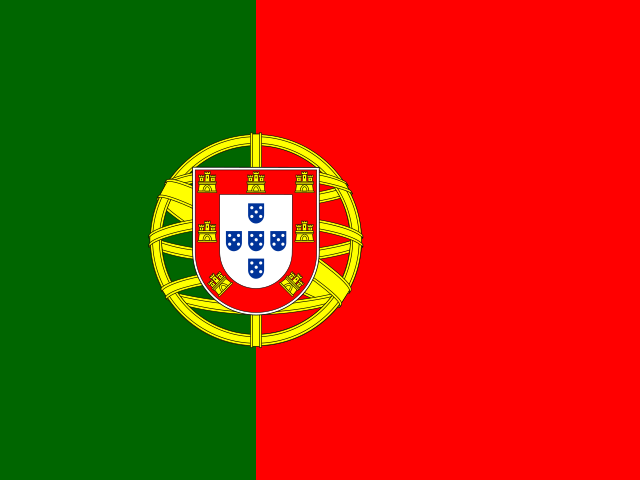 Portugal scholarships
 Qatar scholarships
 Russia scholarships
 Saudi Arabia scholarships
 Singapore scholarships
 South Africa scholarships
 South Korea scholarships
 Switzerland scholarships
 Taiwan scholarships
 Tanzania scholarships
 Thailand scholarships
 UAE scholarships
 Uganda scholarships
 USA scholarships
 Vietnam scholarships